Naming an organism is perhaps one of the most thrilling moments for any biologist who specialises in discovering and describing organisms.
Naming an organism is also the perfect opportunity to show off your creative skills. A “scientific name” or Latin name such as Homo sapiens or Canis lupus will theoretically last forever. Many of the names for animals and plants we use date back to the 18th Century or beyond.
Many taxonomists use scientific names to honour geographical landmarks (for example Homo neanderthalensis comes from the Valley of Neandertal in Germany), famous people (for example, Acrotaphus jackiechani) or gods and goddesses.
Scientific names are also universal; all scientists must use the scientific name, regardless of their own language, and most use Greek or Latin bases. Scientific names also have two sections: the genus (Homo) and an epithet (sapiens). Two organisms of the same genus, like Panthera leo and Panthera tigris, indicate that they are very closely related, but the separation between two different genus and two species of the same genus can often be complicated.
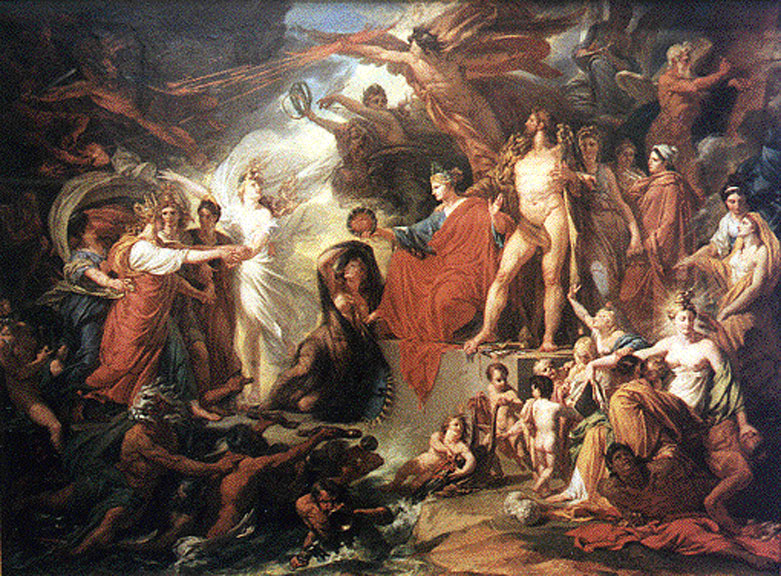
Through their creative skills, scientists have often elevated animals and plants to the realm of gods and goddesses, an idea that dates back to Linnaeus, the XVIIIth century biologist who set up the rules of naming and classification of animals and plants.
We will go through the Greek Pantheon and explore which animals had the privilege of being named after Greek gods (we will avoid their Roman counterparts, excluding cases like Venus or Mars).
Zeus
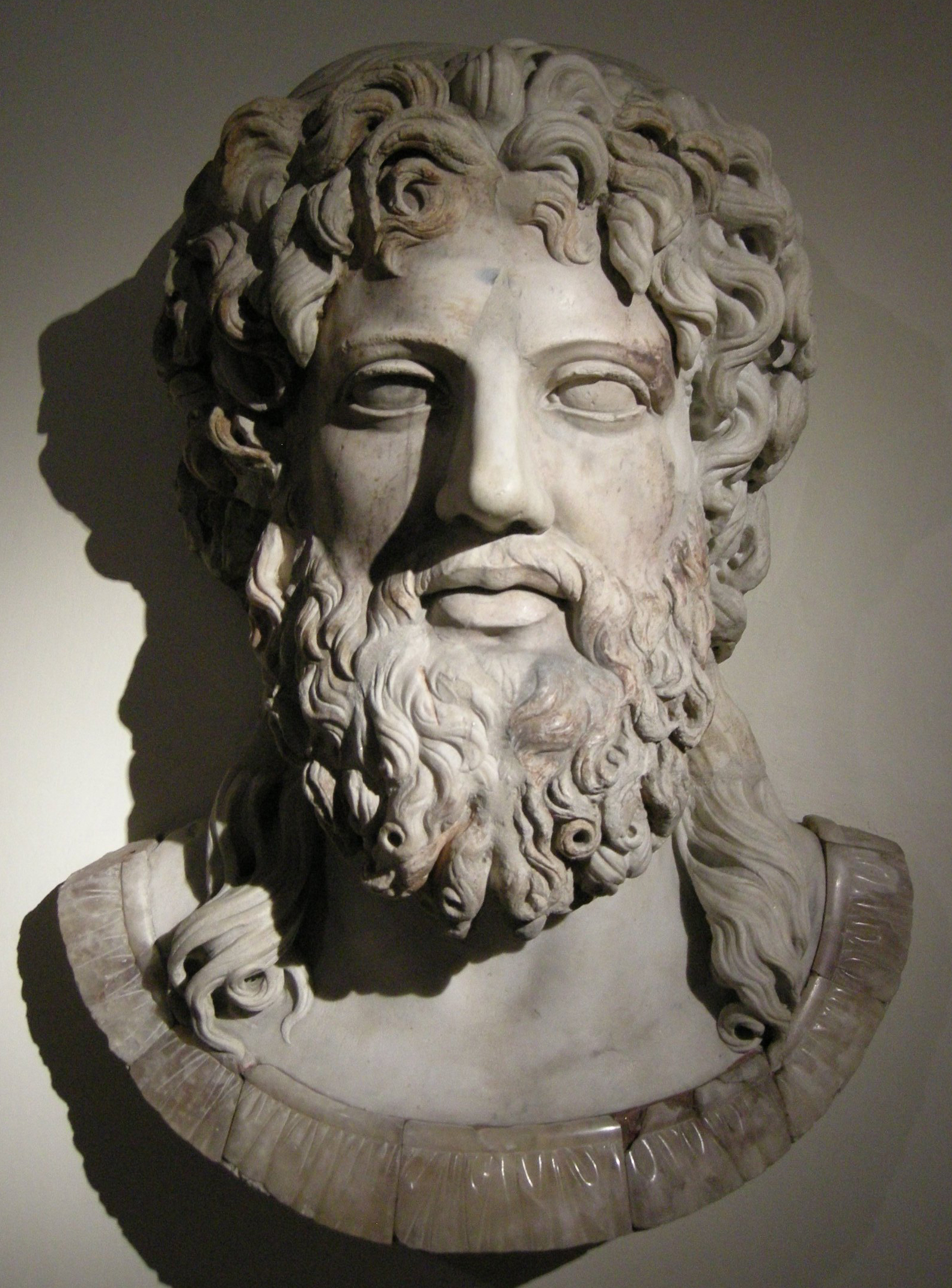
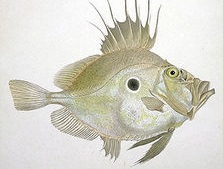
Zeus is the god of gods, master of thunder, father of gods and heroes, and one of the three brothers who defeated their Titanic father Cronus … major words. The animal to embody this almighty god is the fish genus Zeus, commonly named John Dorry or Peter’s fish. Zeus inhabits coastal areas all around the world; it is an active predator able to extend its mouth to capture prey. There isn’t any species reason why Linnaeus gave this name to this inconspicuous fish, because at first glance, there isn’t much of a godly presence in this animal…
Aphrodite
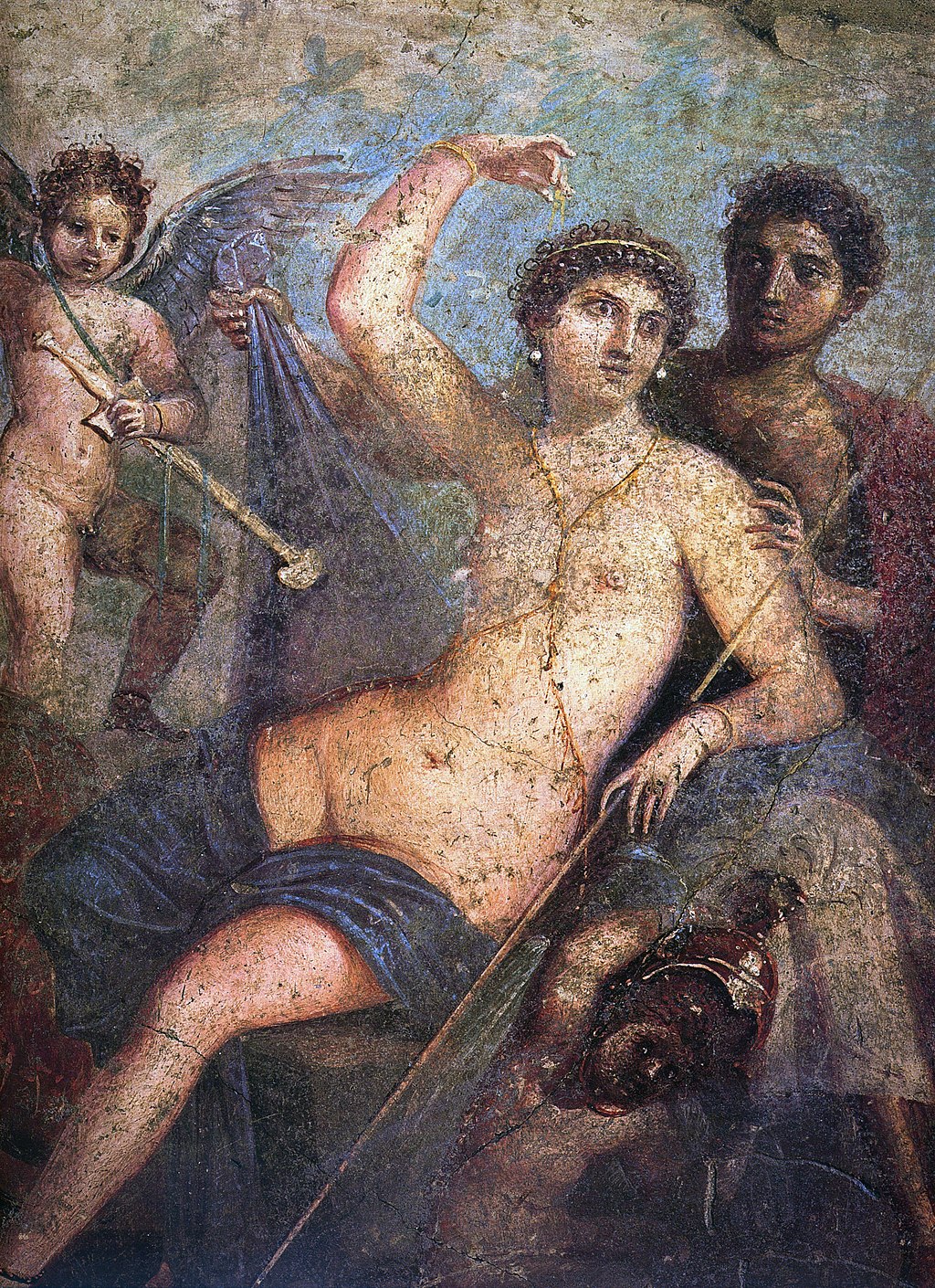

Aphrodite is the goddess of love, beauty and pleasure. There are different versions regarding her origin, but it is clear that her beauty was unprecedented. While originally married to Hephaestus, her list of lovers and illicit children was huge. Her name now belongs to a Polychaete worm (worm with plaques), commonly named “sea mice”. These marine worms live in coastal areas around the world where they usually eat dead animals. The name was also given by Linnaeus, because it was said that when viewed ventrally, they resemble the female genitalia. As an anecdote, though, Aphrodita is a hermaphrodite animal.
Hephaestus


Hephaestus, Aphrodita’s husband, is the god of volcanoes, craftwork and metallurgy. He was the blacksmith of the gods and teacher of humans. While exiled for a while (the reason is controversial), he managed to return to Mount Olympus. The god of metallurgy and volcanoes is depicted by the fish Hephaestus. Hephaestus are omnivorous river fishes found only in Northern Australia and Indonesia. How De Vis, the scientist who named this fish, managed to establish a parallelism between this animal and the god of metallurgy is unclear.
Hades
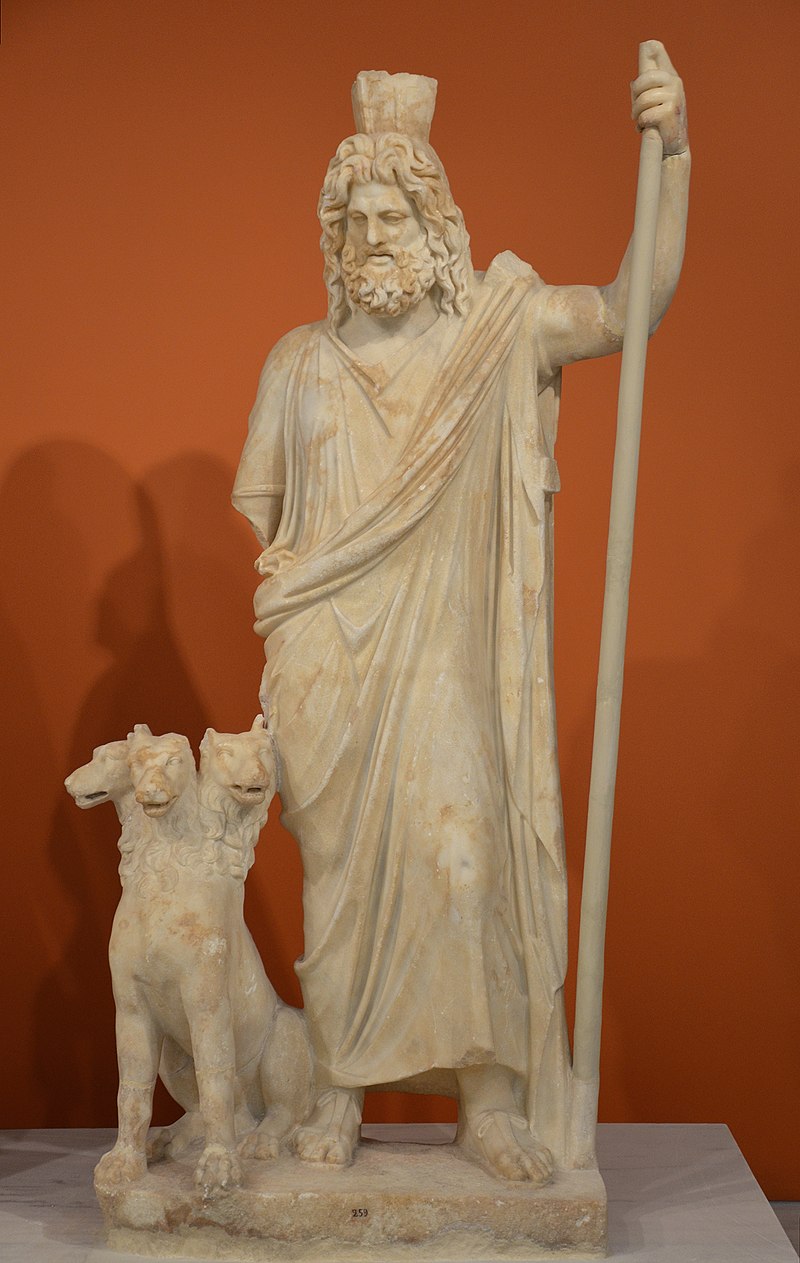
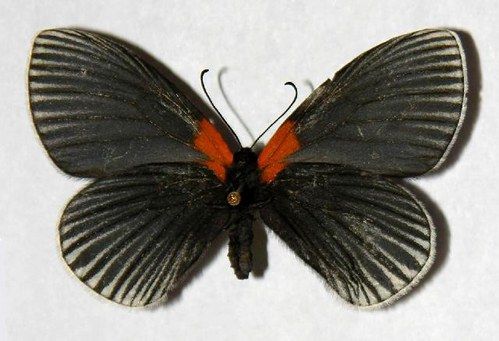
Given that the god of gods is a fish and the goddess of love is a worm, it is only fitting that Hades, the god of death and hell, would be a benign butterfly. Hades was one of the three brothers to fight Cronus, and was in charge of maintaining order in Tartarus, hell in Greek mythology. Hades was not an evil god, although, like many of his counterparts, was no role model either (he kidnapped his wife, among other wrongdoings). The butterfly genus Hades is found across Central and South America. I was not able to find why Westwood chose this animal to depict the lord of Tartarus, but maybe its black and red colours could have inspired the author.
Athena

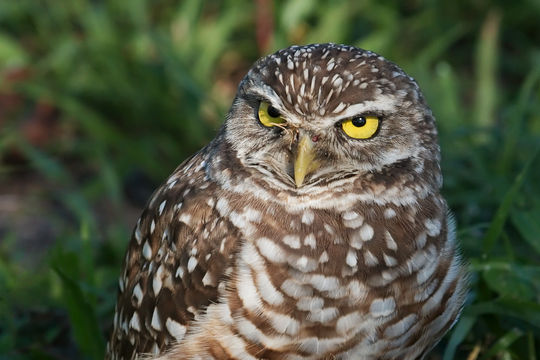
Athene was the goddess of wisdom, and protector of cities, who represented the intellectual part of the human soul. Mathematician, strategist, justice dealer…her importance in Greek mythology was huge. Even today, the capital, Athens, is named after her (or the other way around?). Her name was given to the owl Athene, and for the first time in this post, there is an explanation. Athena was usually depicted with an owl on her hand, and her nickname Glaukomis can be translated to “bright eyes”. The eyes of owls, as well as of many other animals, have a light-reflecting layer that helps them see at night, called a tapetum lucidum. Owls also appear in old Athenian Greek coins, the drachmas. Today, Athene is found on almost every continent on Earth, perhaps guided by its protector goddess.
Hestia

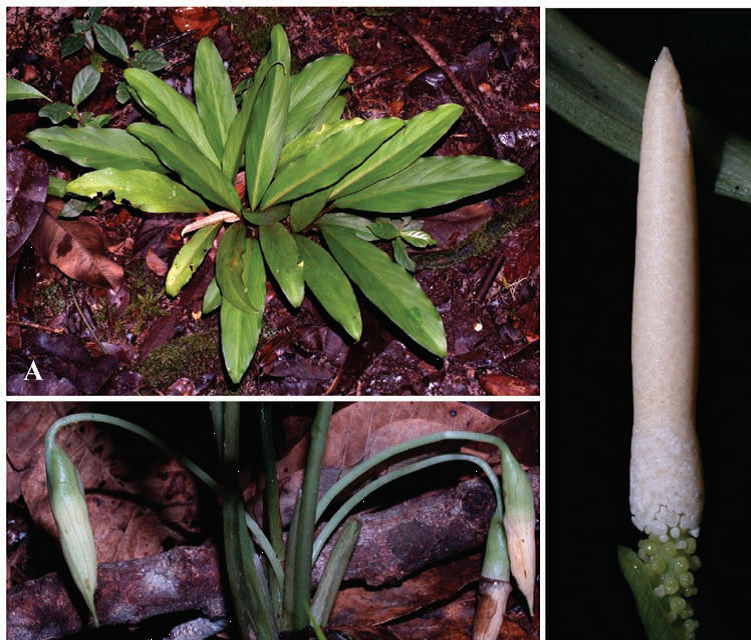
Hestia was a kind goddess of the hearth, home and family, and was often honoured through feasts and animal sacrifices. Hestia would burn these sacrifices to maintain the fires of Olympus burning. Her name was recently given to a plant found across Malaysia of the Aracea family, easily recognizable thanks to their long lightbulb-like structures that bear minute flowers. According to the researchers who named Hestia this plant currently lives in a fire-prone area, a metaphorical survivor of Olympus’ fires. In 2018, though, this name had to be replaced when it was found out a different plant (although fossil) had previously been named Hestia. This plant is now called Vesta, the Roman alternative to Hestia.
Artemis
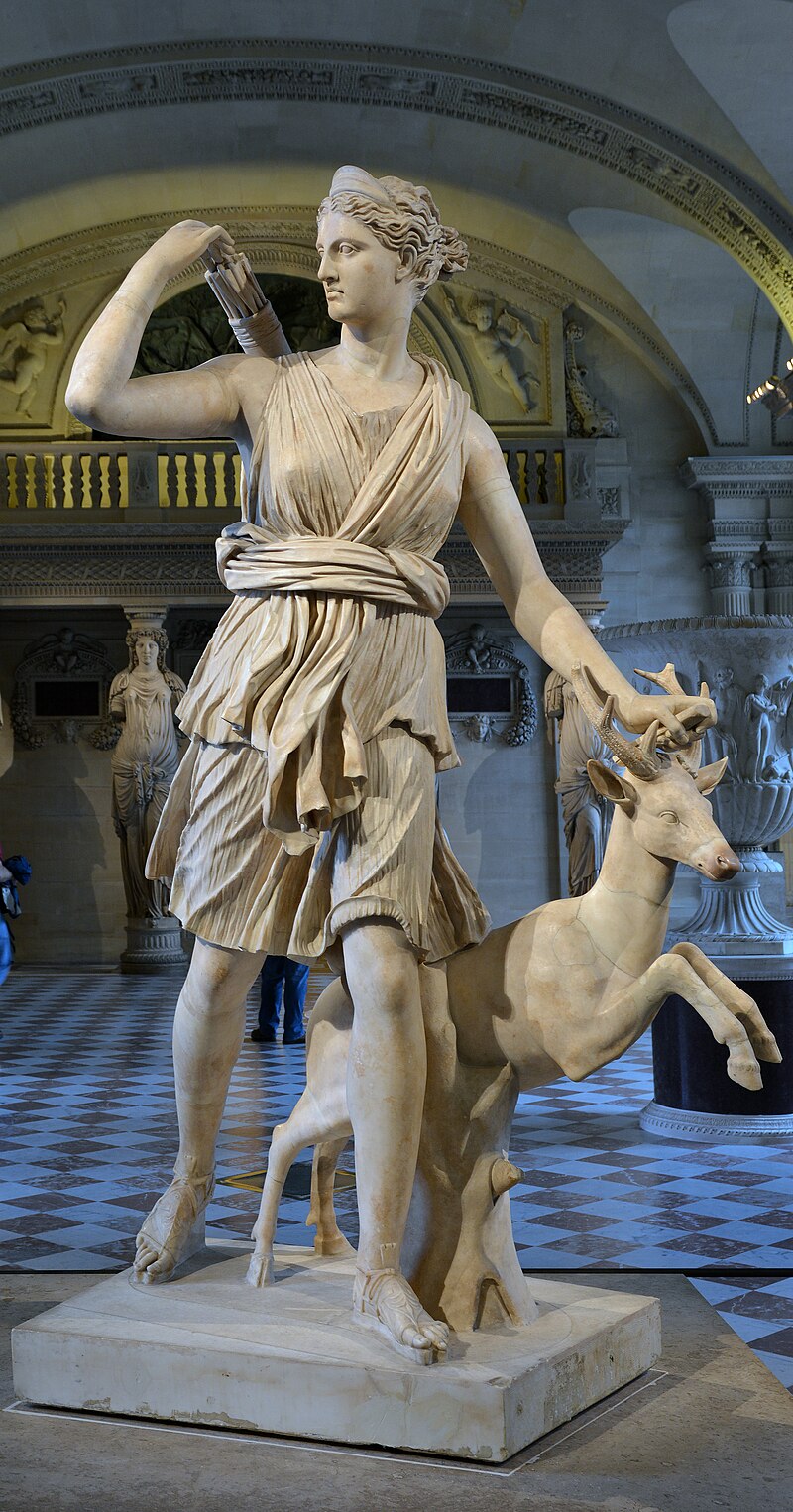

Artemis is the goddess of hunting and fertility. It is possible that the legend of Artemis may be older than Greek mythology and relate to other ancient deities. Artemis is usually depicted with a deer and a cypress, all symbols related to hunting. But none of these organisms is called Artemis. Today, Artemisia is a large genus of plants, with over 400 species with a large geographical distribution. Similar to many of the organisms in this list, the name of this plant was given by Linnaeus, but it is unclear why he gave this plant the name of the huntress goddess.
Honourable mentions
Titans: Eos (Titan of the dawn, a parrot), Selene (Titan of the moon, a fish), Hyperion (Titan related with the sun-titan Helios, a beetle), Tethys (Thetis is the titan of seas, her counterpart a nudibranch), Phoebe (Titan related with the moon, a plant of the Lauraceae), Rhea (Mother of many Olympian gods, it’s the nandu, a flightless bird), Mnemosyne (Mother of the Muses, a cicada).
Lesser gods: Pan (God of the wild, a chimpanzee). Iris (a messenger of the gods, both a type of mantis and a genre of plants), Atropa (goddess Atropos, who chose the mechanism of death, is a plant of the Solanaceae).
References
Wong, S. Y., & Boyce, P. C. (2010). Studies on Schismatoglottideae (Araceae) of Borneo IX: A new genus, Hestia, and resurrection of Apoballis.Botanical Studies, 51(2).
 On elephants and bacteria